Development
The Temperaments—Understanding Your Child
Aug 19, 2026
Written by Mark McGivern
When we try to understand our children, we often begin by asking: Why does my child behave this way?
Why is one child quick to react, another slow to start, one deeply sensitive, and another seemingly unbothered? The idea of the four temperaments offers a simple but profound way to approach this question—not as a system of labels, but as a way of seeing.
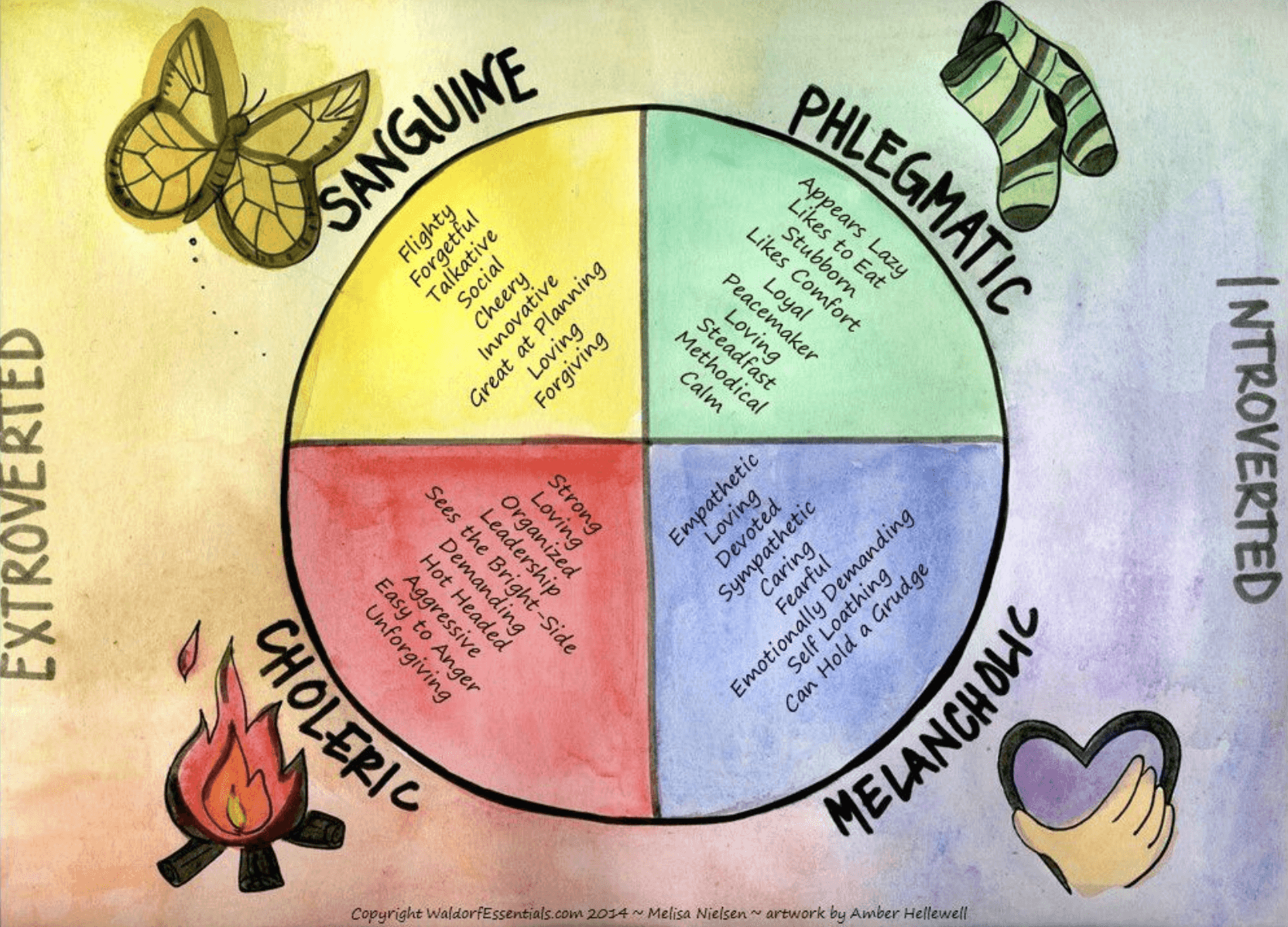
The four temperaments—choleric, sanguine, melancholic, and phlegmatic—are not boxes to put children into. Rather, they are patterns of tendency, ways that energy moves through a child. Every child carries all four, but usually one or two are more dominant. When we begin to recognize these patterns, something shifts: instead of reacting to behaviour, we begin to understand the child behind the behaviour.
The Temperaments at a Glance
Choleric (Strong-Willed, Driven)
The choleric child is full of will. They move forward with intensity, purpose, and often a desire to lead. These are the children who may appear bossy or explosive—but underneath is a powerful capacity for initiative and courage. When understood, the choleric temperament becomes the seed of leadership and determination.
Sanguine (Lively, Social, Changeable)
The sanguine child is light, joyful, and full of movement. Their attention dances from one thing to another, and they thrive on connection and novelty. What can appear as distractibility is actually a gift for enthusiasm and social warmth. When supported well, this temperament becomes adaptable and optimistic.
Melancholic (Sensitive, Thoughtful, Deep)
The melancholic child feels deeply. They may withdraw, become easily discouraged, or seem overly serious. Yet within this sensitivity lies empathy, depth, and a capacity for meaningful connection. These are often the children who notice what others miss and care in a profound way.
Phlegmatic (Calm, Steady, Easygoing)
The phlegmatic child moves slowly and steadily. They resist being rushed and often prefer comfort and routine. What may look like laziness is actually a deep capacity for calm, stability, and contentment. These children can become anchors of peace in a busy world.
Temperaments as a Whole
The undifferentiated self of the child of 0-7 (will)
The individuating child of 7-14 (feeling)
One dominant temperament and one secondary.
Over time we begin to incorporate a third in early adulthood.
Only through conscious inner development do we integrate a fourth.
Why This Matters for Parenting
One of the greatest challenges in parenting is the tendency to treat all children as if they should respond in the same way. We might expect the sanguine child to “focus,” the melancholic child to “cheer up,” or the phlegmatic child to “get moving.”
But when we do this, we are often working against the child’s nature rather than with it.
The temperaments invite a different approach: instead of asking, How do I change my child? we begin asking, How do I meet this child? And How is my child experiencing my temperament?
How to Meet Your Child’s ‘Soul Needs’ Temperamentally
When parenting aligns with temperament, discipline becomes guidance, and conflict becomes an opportunity for connection. When parent’s learn about their own temperaments as an adult they can gain insight into relationship dynamics.
A choleric child needs respect for their will and clear, firm guidance. A melancholic child needs warmth, understanding, and reassurance that their inner world is safe. A phlegmatic child needs motivation through relationship and gradual engagement rather than pressure.
A sanguine child needs rhythm and gentle redirection through interest rather than force.
A melancholic child needs trust and understanding. Expressing over-concern can be helpful. They want to ultimately bring themselves out of the problem. Story is a very good method. They like comfort when feeling low because they can feel alone. Warm blanket, warm tea and honey etc.
A phlegmatic child is everyone’s friend. They get a long with most people and need the will of others to get them active. Encouragement and rhythm.
The Deeper Benefit: Seeing Individuality
Perhaps the greatest gift of the temperaments is that they help us pause before judgment. Instead of seeing a child as “difficult,” “lazy,” or “too emotional,” we begin to see patterns that make sense. This softens our reactions and opens the door to compassion.
But there is an even deeper layer. The temperaments are not the child’s true identity—they are more like the outer colouring of the personality. Beneath them is the individuality of the child, something unique and unfolding. When we understand temperament, we are better able to support that deeper individuality, rather than reacting only to surface behaviour.
Note: There are times when children will imitate the temperament of their parent. This can become evident when suddenly at the 9 or 12-year developmental change they seem to change personalities.
A Practical Shift for Home Life
In practical terms, this means small but meaningful changes:
We guide the choleric child by giving them responsibility rather than confrontation.
We engage the sanguine child by making transitions lively and interesting.
We support the melancholic child by acknowledging their feelings rather than dismissing them.
We motivate the phlegmatic child through companionship rather than urgency.
These are not techniques so much as attitudes. They arise from seeing the child clearly.
Closing Thoughts
Every child is asking, in their own way:
"Do you see me? Do you know me? Do you love me?"
The four temperaments give us a language for seeing—not perfectly, but more deeply.
And when a child feels truly seen, something essential happens: they begin to grow not just in behaviour, but in confidence, resilience, and a sense of belonging in the world.